What Is a Hernia?
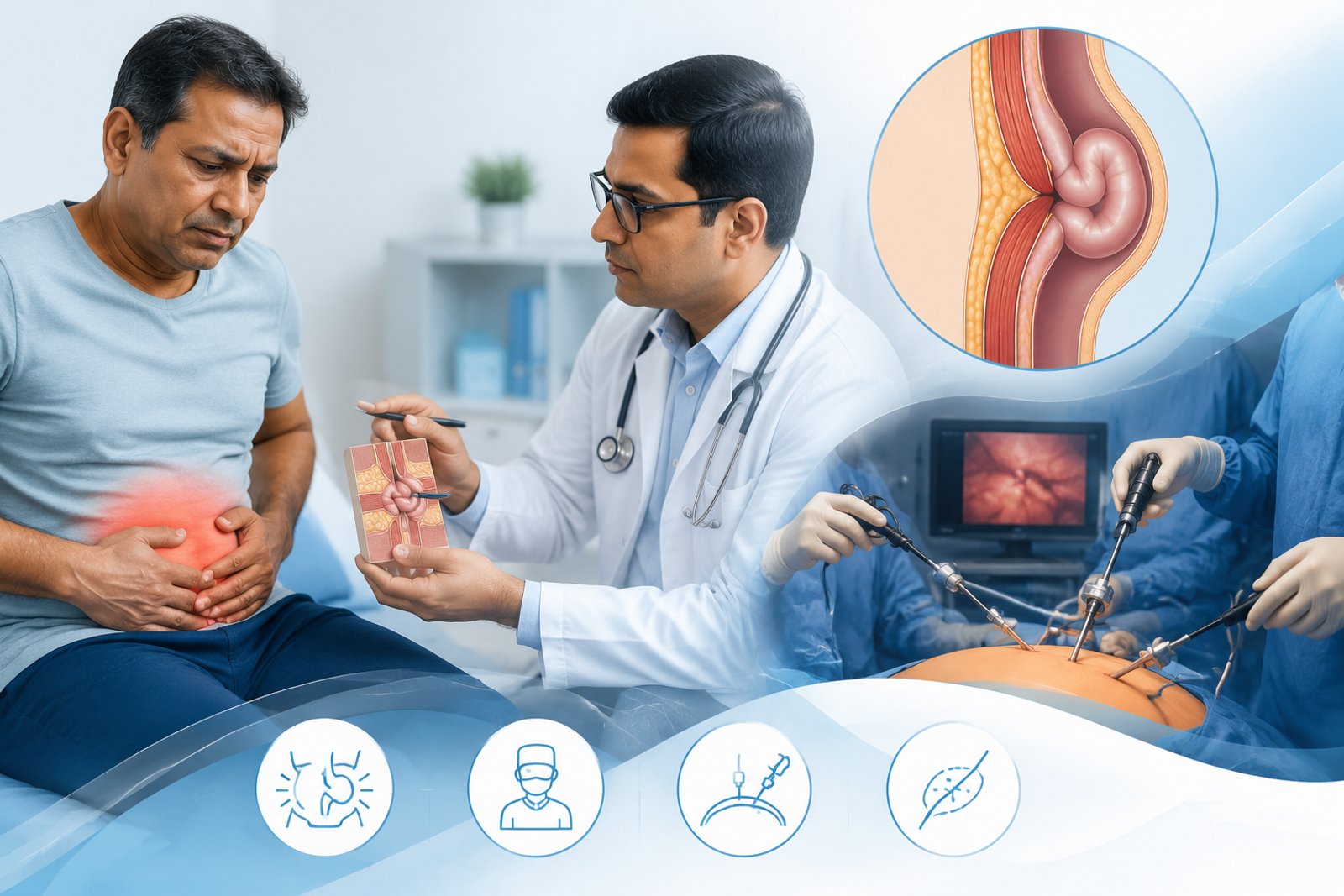
A hernia happens when an organ or tissue pushes through a weak spot in the muscle or tissue wall. Often, you may notice a bulge under your skin. For example, hernias can occur in the belly or groin area. While some hernias cause no pain, others may hurt or feel uncomfortable. Hernias do not heal on their own. Sometimes, hernia laparoscopic repair becomes necessary to fix the problem and prevent complications.
Common Symptoms of Hernia
Hernia symptoms can vary. However, many people notice:
Sometimes, hernias can cause nausea or vomiting. If you notice severe pain, redness, or cannot push the bulge back in, seek medical help right away. These signs may mean the hernia is trapped and needs urgent care.
Causes and Risk Factors
Hernias develop when muscle walls become weak. Several factors can increase your risk, such as:
As you age, your muscles may weaken, making hernias more likely. In addition, men are more likely to develop certain types of hernias than women.
When Does a Hernia Require Surgery?
Not all hernias need surgery right away. However, surgery becomes essential if:
According to the World Health Organization, untreated hernias can lead to serious problems. For example, trapped tissue may lose blood supply, which is dangerous. In such cases, hernia surgery is the only way to fix the problem safely.
Laparoscopic Hernia Repair: What to Expect
Laparoscopic hernia repair is a minimally invasive hernia treatment. During this procedure, the surgeon makes a few small cuts in your skin. Then, a tiny camera and special tools are used to fix the hernia. Because the cuts are small, you may have less pain and a faster recovery. Dr. Pratul R. Gupta, a hernia specialist, uses advanced techniques to ensure safety and comfort.
Before surgery, you will meet your doctor to discuss your health and the procedure. After surgery, you can often go home the same day or the next day. Most people return to normal activities within a week or two.
Benefits of Laparoscopic Surgery
Laparoscopic hernia repair offers many advantages over open surgery. For example:
Because of these benefits, many patients prefer minimally invasive hernia treatment. However, your doctor will help you decide the best option for your case.
Recovery and Aftercare Tips
After hernia laparoscopic repair, proper care helps you heal faster. Here are some tips:
If you notice fever, severe pain, or swelling, contact your doctor right away. Early care can prevent complications and support a smooth recovery.
Why Consult Dr. Pratul R. Gupta (Lab & Gastro Surgeon)?
Choosing the right hernia specialist is important for your health. Dr. Pratul R. Gupta is a skilled Lab & Gastro Surgeon with years of experience in hernia surgery and laparoscopic hernia repair. He uses the latest techniques for safe and effective treatment. Patients in the region trust Dr. Gupta for his caring approach and excellent results. If you are looking for hernia surgery in your city, Dr. Gupta can guide you every step of the way.
Frequently Asked Questions (FAQs)
For more information or to discuss your symptoms, consult Dr. Pratul R. Gupta, an experienced Lab & Gastro Surgeon, for personalized hernia treatment advice.